From Hobby to Aircraft Company: Business and Tax Lessons from the Ligeti Stratos
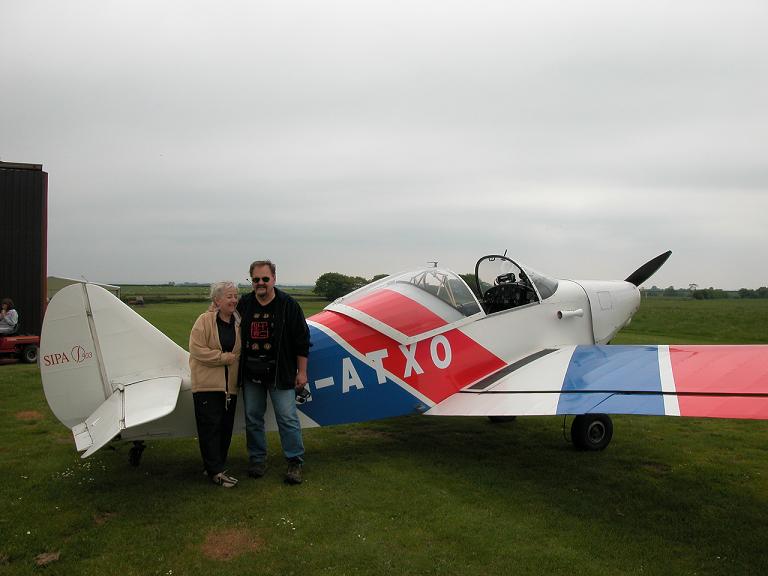
Few stories show the line between a hobby and a business as clearly as The Ligeti Stratos history: a couple who built an aeroplane in their own workshop, flew it in 1985, won awards with it, and in 1986 started an aircraft company with the help of a financial broker. Everything that followed – a production facility, a second prototype, international promotion and a financial backer with expectations – is the path many Canberra inventors, makers and side-hustlers walk today. The Australian Taxation Office asks exactly the questions the Ligetis faced, and the answers determine how income is taxed, what can be claimed and who carries the risk.
The story in brief
Charles and Helena Ligeti arrived from Czechoslovakia in 1977. Charles worked as a chemical engineer; the aircraft was a private passion, developed through radio-controlled models and a Birdman Rally glider before construction of the S1 Stratos began in late 1983. The prototype first flew at Penfield Aerodrome on 25 April 1985. It outperformed every other aircraft in its category, won awards in Australia and at Oshkosh in the United States, and in 1986 the couple formed a company to produce the S2. Charles was killed test-flying the S2 in September 1987, and Helena closed the business. Their son Ron, now an aerospace engineer, has since resumed the project.
Lesson 1: the ATO's hobby-versus-business test
Up to 1986 the Stratos was a hobby. The couple paid for it from salary, sold nothing and had no intention of profit. From the moment they set up a company, sought capital and built a production facility, it was a business. The ATO looks at the same indicators:
- Is there an intention to make a profit, and a realistic prospect of one?
- Is the activity repeated, organised and run in a businesslike way, with records, a plan and a separate bank account?
- Is it of a size and scale consistent with a business in that industry?
- Is the activity carried on for commercial reasons rather than personal enjoyment?
Why it matters: hobby income is not assessable but hobby expenses are not deductible. Business income is assessable, business losses may be deductible (subject to the non-commercial loss rules), and GST registration becomes compulsory once turnover reaches $75,000. Many Canberra makers sit in a grey zone for years; the right time to talk to an accountant is before the first invoice, not after the first tax return.
Lesson 2: choose the structure before you take money
The Ligetis moved from a private project straight to a company with an outside backer. For an Australian start-up the realistic options are:
| Structure | Best for | Watch out for |
|---|---|---|
| Sole trader | Testing an idea, low risk, no staff | Unlimited personal liability; all profit taxed at your marginal rate |
| Partnership | Two founders, simple split | Each partner liable for the other's debts |
| Company | Taking investment, limiting liability, retaining profits | ASIC compliance, directors' duties, 25% or 30% tax rate |
| Trust (often with corporate trustee) | Family businesses, asset protection, distribution flexibility | Complexity and cost; losses trapped in the trust |
An aviation manufacturing venture with a financial broker involved belongs in a company, as it did in 1986. Limited liability matters most in exactly the industries where a product can fail catastrophically.
Lesson 3: record the prototype costs
Years of model building, moulds, materials, engines and test flying went into the S1 before any business existed. Under current rules, expenses incurred before a business commences are generally not deductible, but some can be capitalised and claimed over five years as "blackhole" expenditure once the business starts, and prototype costs can form part of the cost base of the intellectual property. None of that is possible without receipts. Keep a dated log of every dollar spent on a project that might one day become a business.
Lesson 4: the R&D tax incentive
The S2 was a genuine research programme: new aerodynamics, new moulds, new tooling and a structured test campaign. Today a company doing that work could register with AusIndustry for the Research and Development Tax Incentive and receive a refundable offset on eligible expenditure – for small companies, currently the company tax rate plus 18.5 percentage points. The catch is documentation: the ATO and AusIndustry expect contemporaneous records showing a hypothesis, experiments and results, which is precisely what the Ligetis were doing with each model and each test flight.
Lesson 5: investors change the risk calculation
The Stratos history makes a sobering point: Ron Ligeti believes his father's careful approach to flight testing was compromised by business pressure and the need to meet a backer's expectations. The financial lesson is universal. Once outside money is in, founders are managing someone else's timeline. Structure the investment so that technical decisions stay with the people qualified to make them, document milestones realistically, and never let a funding deadline dictate a safety decision. A good accountant will model what happens to the business if a milestone slips by six months – before the investor's money arrives.
Lesson 6: insurance, personal guarantees and succession
When Charles died, Helena was left with a company, two young children and no income from it. She closed the business and worked in administrative jobs to support the family. Three things every founder in a dangerous or specialist field should have in place:
- Key-person and life insurance owned in a way that pays out to the family or the company as intended.
- No unnecessary personal guarantees on leases, equipment finance or supplier accounts; where they are unavoidable, know exactly what they cover.
- A succession or wind-up plan that lets a surviving partner close or sell the business cleanly without being pursued for debts.
Lesson 7: the second generation
Ron Ligeti is rebuilding the Stratos in his own workshop with his mother's help. If that project becomes a business, it starts with real advantages – existing designs, a name, decades of documented history – and the same questions as in 1986. Intellectual property should be valued and held correctly (often in a separate entity from the trading company), family contributions documented, and the hobby-to-business transition handled deliberately rather than by accident.
A checklist for Canberra makers and inventors
- Keep a dated expense log from the first day, even while it is still a hobby.
- Decide on a structure before taking money from anyone.
- Register for an ABN and GST at the right time, not late.
- Check R&D tax incentive eligibility as soon as experimentation starts.
- Insure the person, not just the product.
- Separate the intellectual property from the trading risk.
The Stratos was an extraordinary aeroplane and the Ligetis were extraordinary people. Their story is told in full in the archived PDF The Ligeti Stratos hosted by Ultralight Aircraft Australia, alongside the parallel story of Scott Winton's Facet Aircraft in Scott Winton: 25 years since. For anyone in Canberra turning a passion into a company, both are worth an evening's reading before the first meeting with an accountant.
This article is general information only and is not tax, legal or financial advice. Speak to a registered tax agent about your own circumstances.